
Importance of Tapered Roller Bearings in Engineering Products
2026-08-20
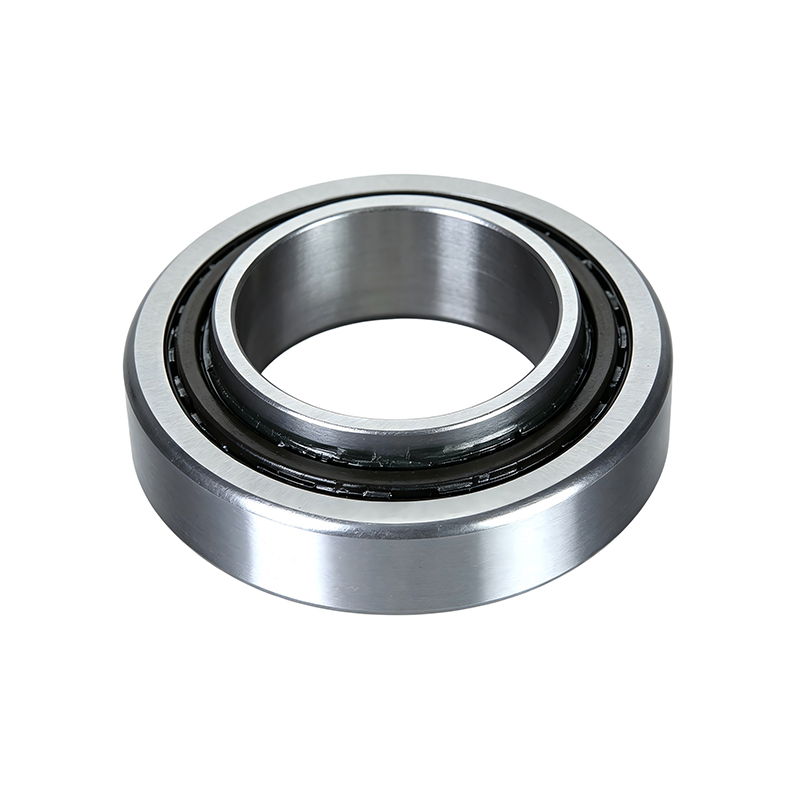
Tapered roller bearings are split type bearings; The inner and outer rings of the bearing have tapered raceways. Based on the number of rows of installed rollers, this type of bearings is divided into single-row, double-row and four-row tapered roller bearings and other design types. Single row tapered roller bearings are capable of supporting radial load and axial load in the same direction. When a bearing perceives a radial load, an axial component arises, so another bearing is required that can perceive an axial force in the opposite direction to balance it.
Tapered roller bearings mainly support combined radial and axial loads with a predominance of radial loads. The load-bearing capacity of a bearing depends on the angle of the outer ring raceway: the larger the angle, the higher the load-bearing capacity. This type of bearings is a split type bearing; Based on the number of rows of rolling elements, they are divided into single-row, double-row and four-row tapered roller bearings. The clearance of single row tapered roller bearings must be adjusted by the user during installation; The clearance of double-row and four-row tapered roller bearings is already set at the manufacturer in accordance with customer requirements and does not require adjustment by the customer.
Tapered roller bearings have tapered inner and outer ring raceways with tapered rollers between them. The projection lines of all conical surfaces converge at one point on the bearing axis. This design makes tapered roller bearings particularly suitable for carrying combined (radial and axial) loads. The axial load carrying capacity of a bearing is largely determined by the contact angle α; The larger the angle α, the higher the axial load capacity. The magnitude of the angle is expressed by the calculated coefficient e; The larger the e value, the larger the contact angle and the higher the bearing's suitability for supporting axial loads.
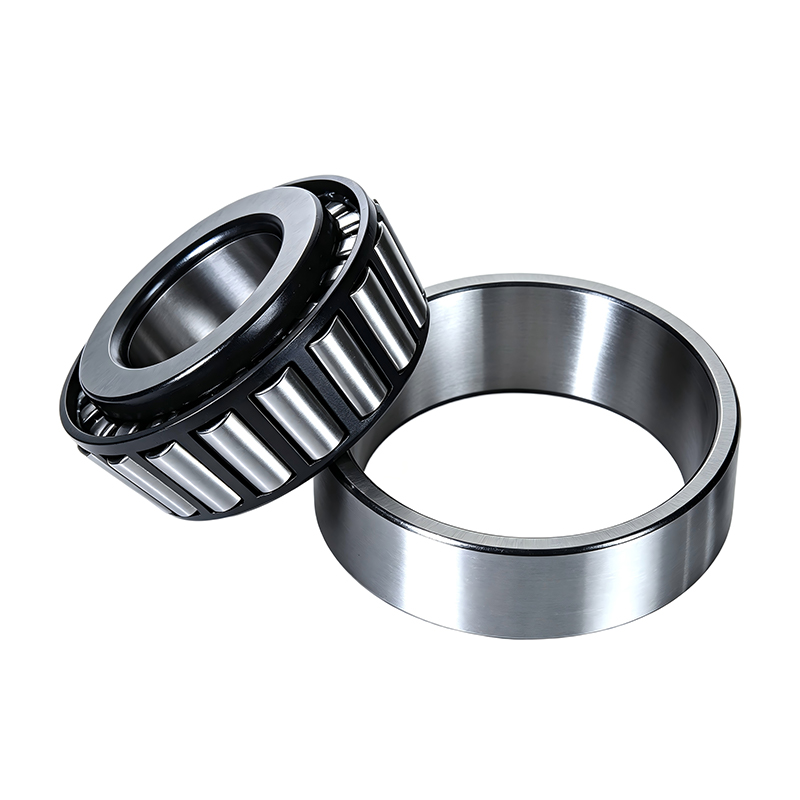
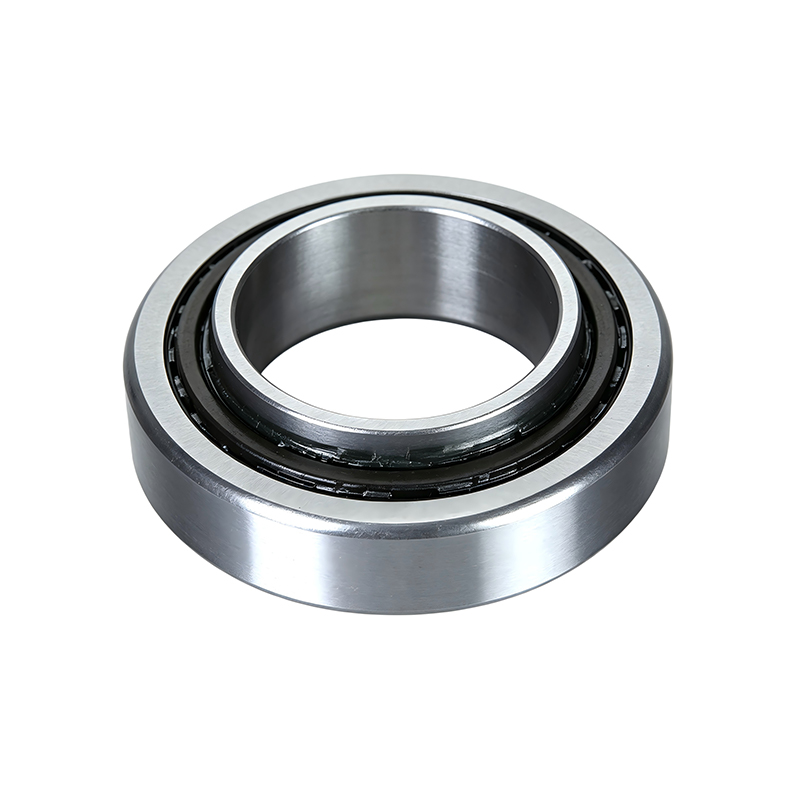
Tapered roller bearings are typically a split type bearing, meaning a tapered inner assembly consisting of an inner ring with rollers and a cage can be mounted separately from the tapered outer ring (outer ring).
A single row tapered roller bearing has an outer ring, and its inner ring and a set of tapered rollers form an internal assembly surrounded by a box cage. The outer ring may be separated from the inner assembly. According to the ISO standard for overall dimensions of tapered roller bearings, the outer ring or inner assembly of any standard size of tapered roller bearing must be internationally interchangeable with an outer ring or inner assembly of the same size. That is, for an outer ring of the same size, in addition to meeting the outer dimensions and tolerances of ISO 492 (GB 307), the cone angle of the inner assembly, the cone diameter of the assembly, etc. must also meet the relevant interchangeability requirements.
Generally, the cone angle of the raceway of the outer ring of a single row tapered roller bearing is 10° to 19°, and the bearing can simultaneously bear the combined action of axial and radial loads. The larger the cone angle, the higher the ability to absorb axial load. For bearings with a large cone angle, the suffix B is added to the designation; the cone angle ranges from 25° to 29°; such a bearing can withstand larger axial loads. In addition, single-row tapered roller bearings allow the clearance to be adjusted during installation.
Double-row tapered roller bearings have a one-piece outer ring (or inner ring). The small ends of the two inner rings (or outer rings) are located close to each other, with a spacer ring between them; The clearance can be adjusted by the thickness of the spacer ring, and the preload of the double row tapered roller bearing can be adjusted by the thickness of the spacer ring.
Four-row tapered roller bearings have basically the same characteristics as double-row tapered roller bearings, but compared to double-row tapered roller bearings, they accept a higher radial load, have a slightly lower maximum rotation speed, and are used mainly in heavy engineering, for example, in rolling mills, etc.